
Route Briefing • Xi’an Route 01 • Terracotta Warriors & Huaqing Palace
Route data reviewed: October 2026 • Road timings estimated via Tencent Maps navigation data (GCJ-02)
Hosting overseas travellers on a private excursion across Shaanxi comes down to knowing where public transit works well and where private vehicles eliminate immense friction. Inside downtown Xi’an (within the ancient Ming City Wall), the subway is rapid, punctual, and clean—visiting the Bell Tower or the Big Wild Goose Pagoda on Metro Lines 2 and 3 is often faster than sitting at downtown traffic lights. But heading northeast beyond the Third Ring Road toward Lintong for the Terracotta Warriors and the imperial hot springs of Huaqing Palace, public transit quickly becomes an ordeal of suburban bus queues, crowded shuttle transfers, and aggressive unofficial touts pitching unlicensed docents. This full-length operational guide details Xi’an Route 01 measured strictly from the Bell Tower, pairing Emperor Qinshihuang’s legendary clay army with the Tang Dynasty mountain retreat of Mount Li for bespoke private travel in China with dedicated private vehicles, no commissioned shopping stops, and secure luggage storage in the trunk.
Trip Essentials • At a Glance
- Driving Distance & Span: Approx. 90 km round-trip from central Xi’an: 44.2 km to the Terracotta Army (approx. 65 min via G30 Lianhuo Expressway), 8.6 km scenic transfer to Huaqing Palace (approx. 17–23 min), and 36.6 km return (approx. 67 min). Pure driving time: roughly 2.5 hours. Typical door-to-door day trip span: 7 to 9 hours from hotel pickup to evening drop-off (or midnight if attending the evening *Song of Everlasting Sorrow* performance).
- Two-Site Pacing: 3.5 unhurried morning hours exploring Pits 1–3 and the Qinshihuang Mausoleum (Lishan Garden Bronze Chariots Museum), followed by 2.5 to 3 afternoon hours wandering the imperial hot spring ruins and the historic Five-Room Hall at Huaqing Palace.
- Booking & Real-Name Entry: Strict online real-name advance reservation is mandatory for the Terracotta Army (daily ceiling of 65,000 visitors, ticket gates stop admitting at 17:00). Original physical foreign passports must be scanned at security turnstiles for paperless entry.
Route Geography & Logistics
How to Travel from Central Xi’an to Lintong & Huaqing Palace
Measured from the Bell Tower in central Xi’an as the urban benchmark under normal traffic conditions, this full-day corridor spans approximately 90 kilometers across three natural legs: the morning run from downtown to the Terracotta Army covers 44.2 km in roughly 65 minutes via the G30 Lianhuo Expressway; the midday transfer between the mausoleum and Huaqing Palace spans 8.6 km in 17 to 23 minutes through the foothills of Mount Li; and the late afternoon highway return completes the remaining 36.6 km back to central Xi’an in about 67 minutes.
Why Public Transit Breaks Down on the Lintong Corridor
Independent travelers frequently ask whether Metro Line 9 makes public transit practical for this day trip. While Metro Line 9 does connect the city with Lintong District, relying solely on public transport creates significant friction once you leave the train station.
Taking the subway from downtown requires riding Metro Line 1 or 6, transferring at Fangzhicheng Station to Metro Line 9, and riding another 30 minutes to Huaqingchi Station (fare approx. 8 RMB, over 60 minutes pure rail transit). From Metro Exit C, travelers cannot simply walk to the Terracotta Army—they must join a congested bus stop to board local Bus 613 for another 20 to 30 minutes. During morning rush hours and peak holiday seasons, queues at Bus 613 spill across the sidewalk.
Furthermore, suburban transit hubs around Lintong attract unauthorized taxi operators and persistent touts who approach disembarking foreigners offering unsolicited private guide services or detours to commercial shopping villages. Navigating these interactions in a foreign language after a crowded bus transfer adds unnecessary stress to what should be an awe-inspiring cultural morning.
For travelers arriving directly from Xi’an Xianyang International Airport (XIY) or Xi’an North Railway Station with heavy luggage, public transit forces you to haul suitcases through turnstiles, crowded escalators, and bumpy pedestrian paths. With a dedicated private car, your luggage remains locked securely in the trunk throughout both archaeological visits, while you travel in air-conditioned comfort directly from door to turnstile.
Archaeological Field Guide
Terracotta Army: Pits 1–3, The Seated Figurine & Bronze Chariots
Discovered accidentally in March 1974 by local farmers digging a well, the Emperor Qinshihuang’s Mausoleum Site Museum represents one of the greatest archaeological discoveries of the twentieth century. The unified adult entry ticket costs 120 RMB and grants access to both the Terracotta Warriors Museum and the Qinshihuang Mausoleum (Lishan Garden), connected by a complimentary 17-minute electric shuttle. An optional electric cart inside Lishan Garden costs 15 RMB, and an optional pedestrian street shuttle near the commercial plaza costs approx. 5 RMB (reference rate).
Pit 1: The Main Vanguard & Fire Marks of Antiquity
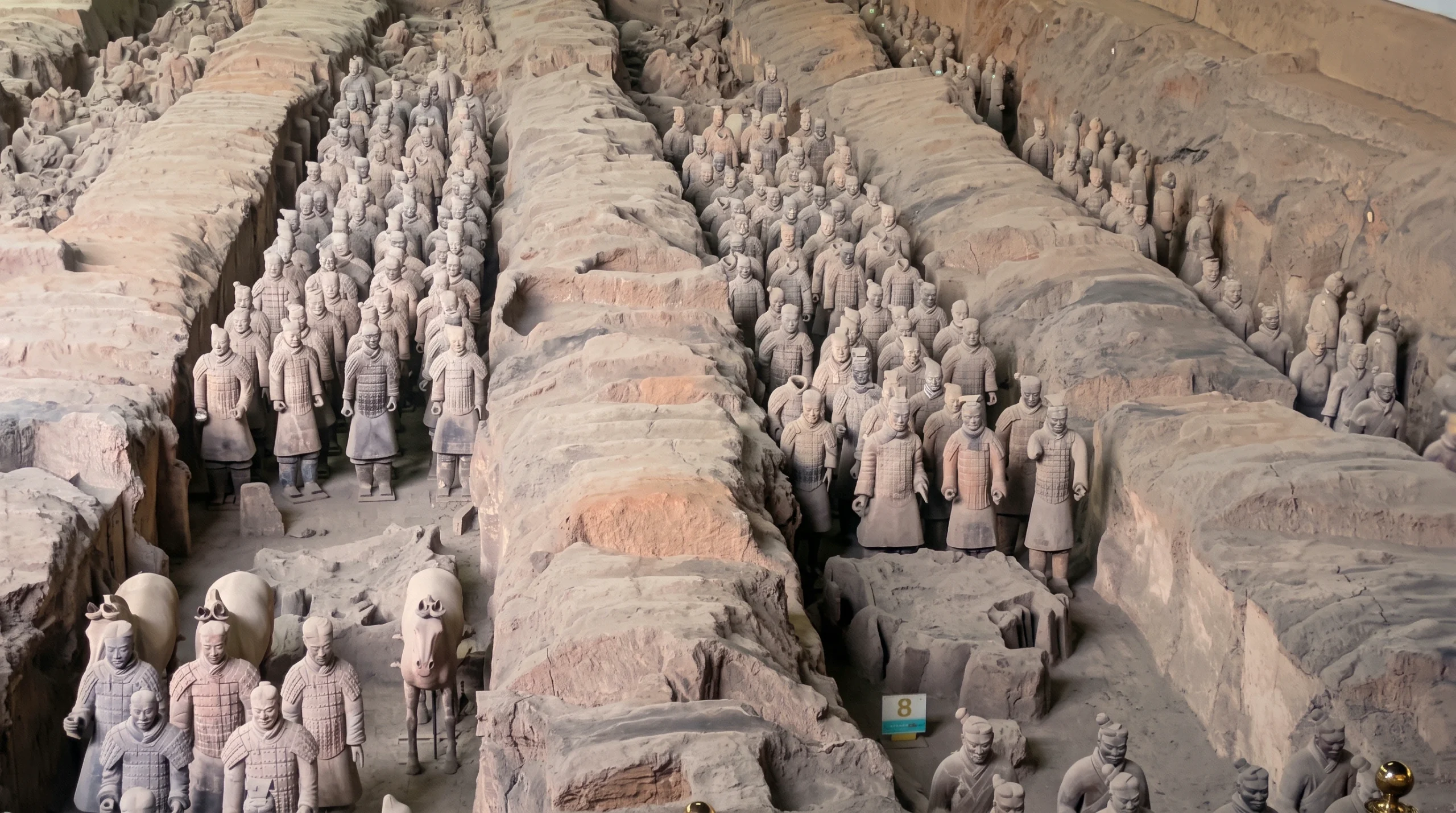
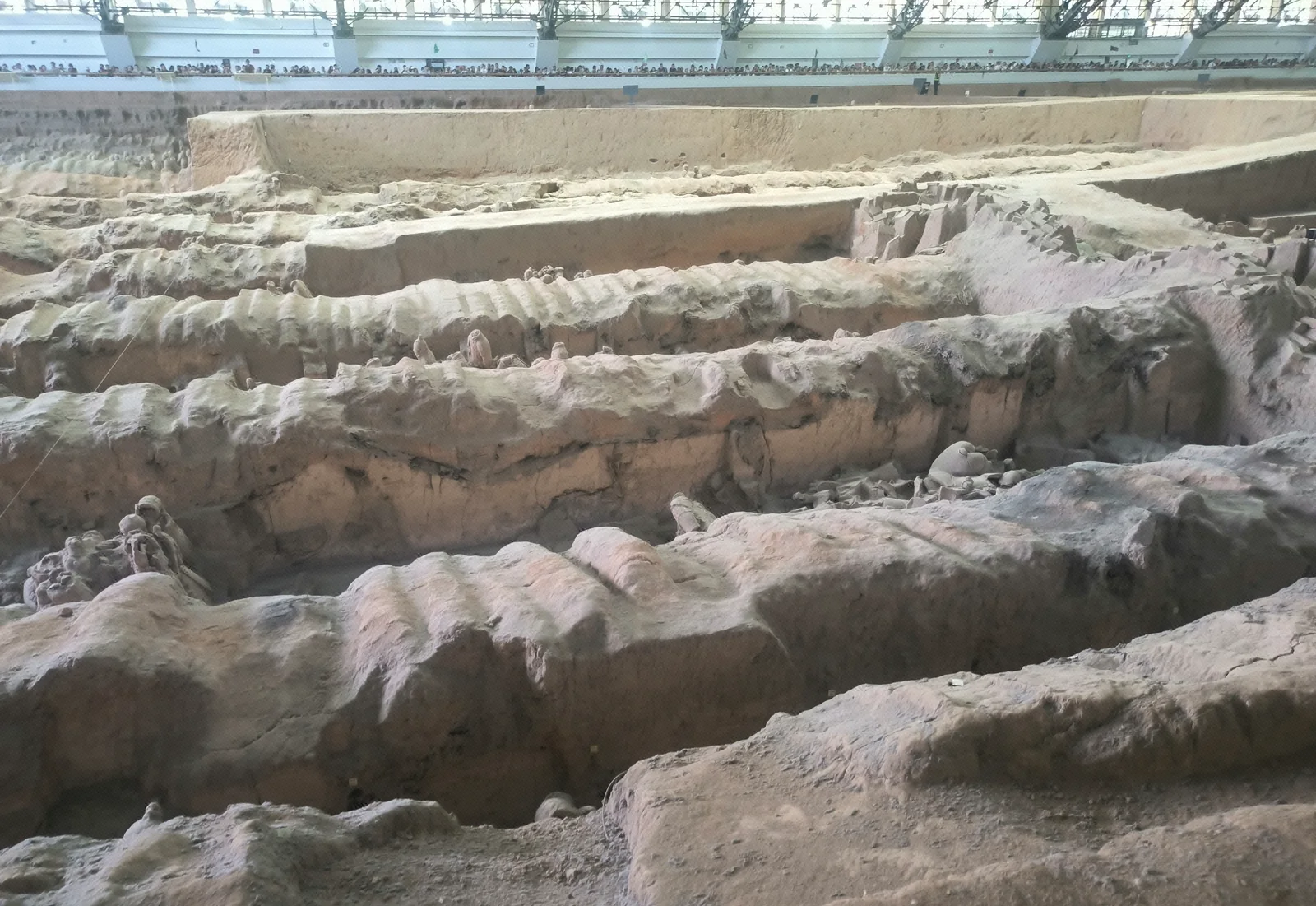
Entering the cavernous excavation hangar of Pit 1, you face over 6,000 life-sized clay soldiers and warhorses arrayed in battle formation across eleven parallel corridors. Look closely at the longitudinal rammed-earth partitions that divide the ranks: along their upper edges, you can distinctly see semi-circular grooves left by the original pine and cypress timber roofing that collapsed over two millennia ago.
Dark, blackened charcoal scorch marks remain clearly visible on the clay walls—evidence traditionally attributed to the cataclysmic fire set by warlord Xiang Yu in 206 BC following the fall of the Qin Dynasty. Along the edges of the formation, modern electronic monitoring sensors track soil moisture, structural tilt, and foundation subsidence to safeguard these delicate earthen structures. At the rear of Pit 1, a live conservation hospital allows visitors to observe archaeologists meticulously reassembling shattered ceramic fragments piece by piece.
Pit 3 & Pit 2: The Command Bunker & On-Site Lab
Pit 3 served as the supreme command headquarters for the entire subterranean army. Unlike the dense combat columns of Pit 1, Pit 3 contains only 68 elite officer figures and a ceremonial chariot station. Notice the raised stepped terrace (二层台) around the perimeter, where several un-restored headless warrior torsos are preserved in their exact unexcavated discovery positions.
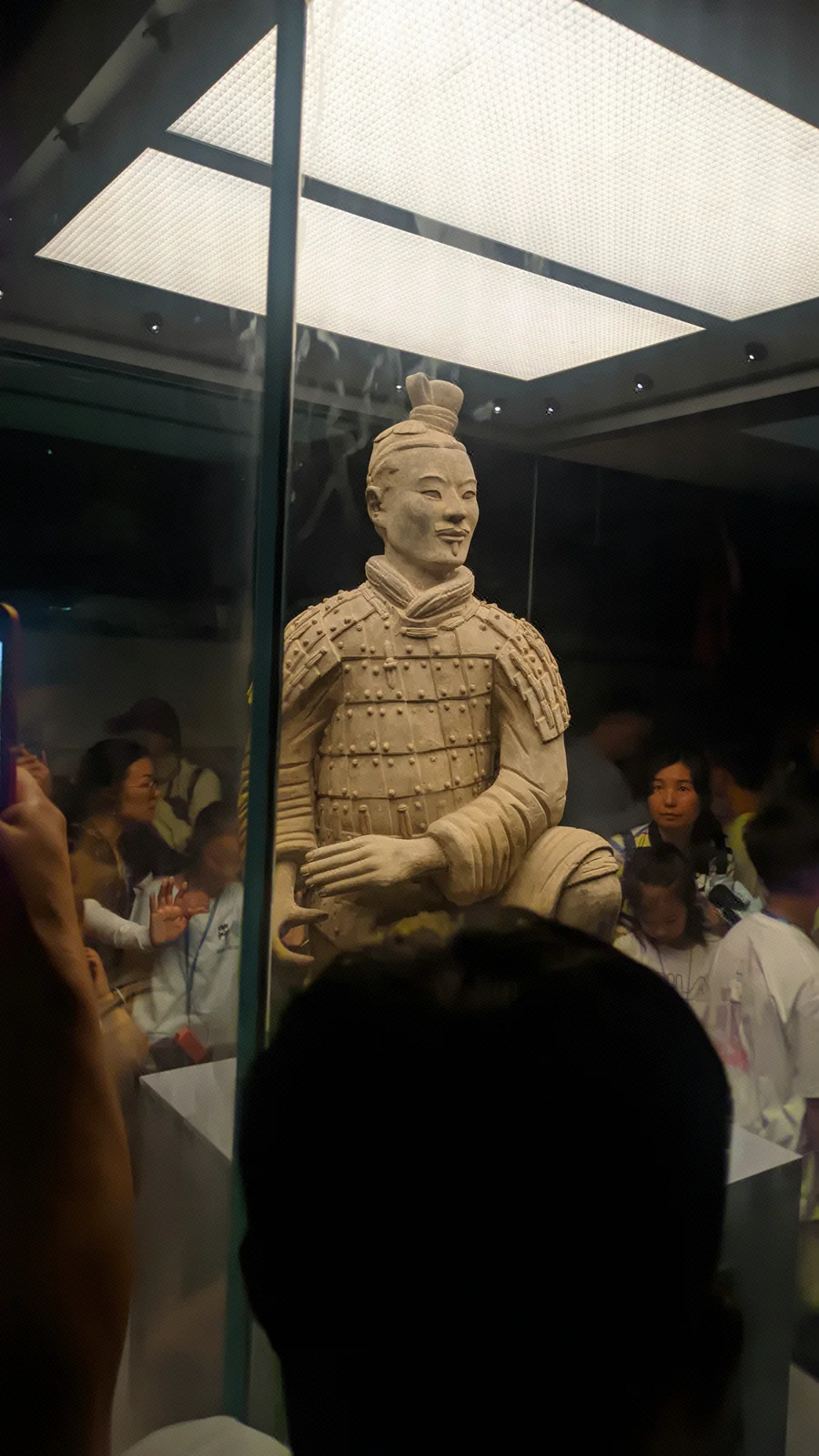
Entering Pit 2 under the archway inscribed in small seal script (秦兵馬俑二號坑大廳), you immediately notice a state-of-the-art transparent glass archaeology laboratory constructed directly atop the unexcavated earth mound. Pit 2 houses specialist units: crossbowmen, armored cavalry with saddled steeds, and combat charioteers. Standalone glass showcases display the three master sculptures of the collection: the Kneeling Archer, whose boot sole displays exquisite stitched tread patterns; the High-Ranking Military Officer (General’s Figurine) wearing a double-tailed pheasant cap; and the Armored Cavalryman standing composed beside his bridled warhorse.
The Rare Seated Figurine & The Bronze Chariots
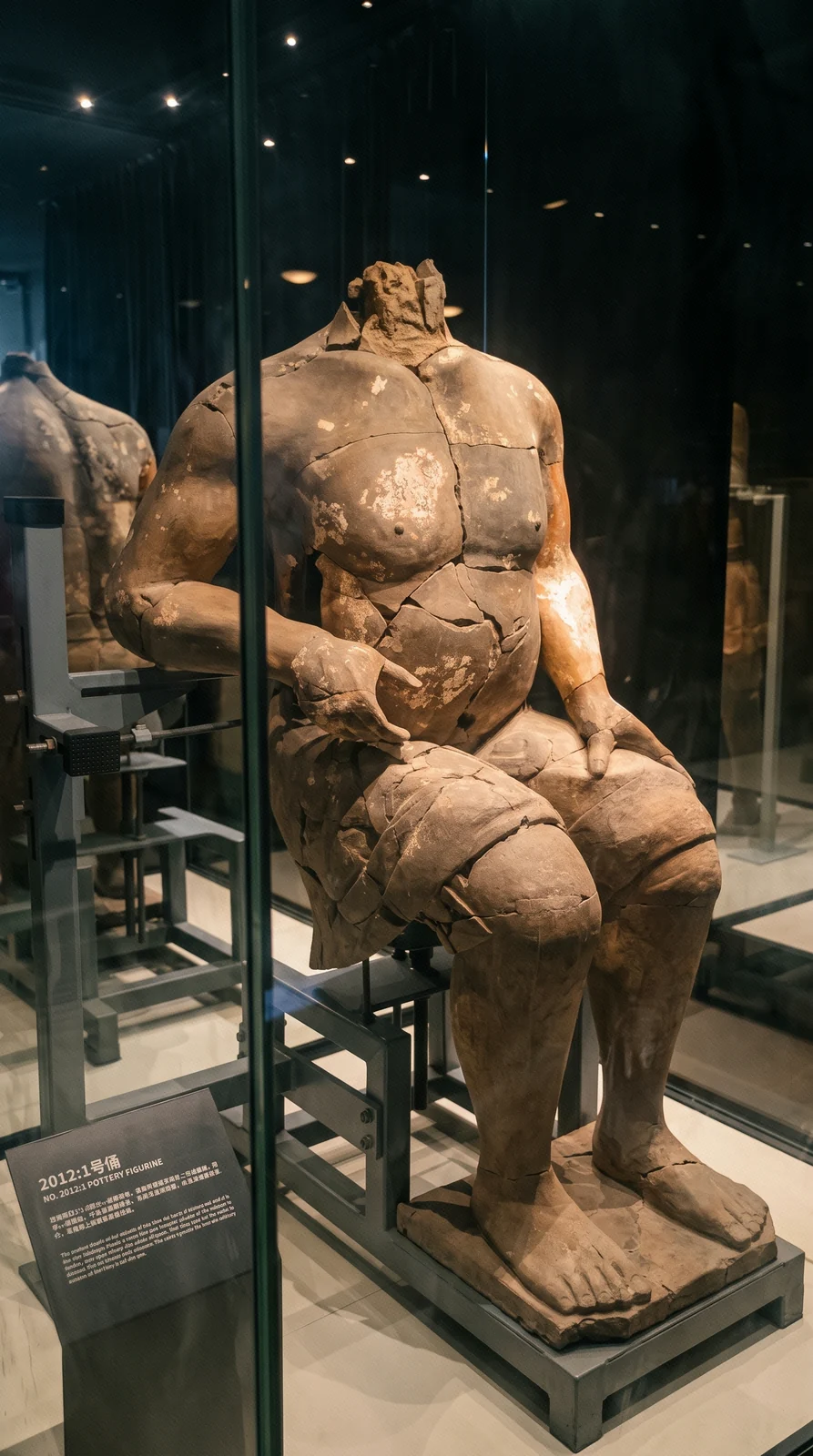
Inside the Cultural Relics Exhibition Hall, do not miss the extraordinary No. 2012:1 Seated Pottery Figurine (2012:1号坐姿俑). Unearthed in 2012 from the K9901 Acrobats Pit (百戏俑坑) on the southeast periphery of the Emperor’s tumulus—not from the military pits—this figure stands 141.5 cm in residual height. Depicted bare-chested wearing painted shorts, with knees bent and feet in upturned square-toed slippers, it retains traces of powdery white mineral pigment and is the only fully restored seated figure discovered across the entire imperial necropolis.
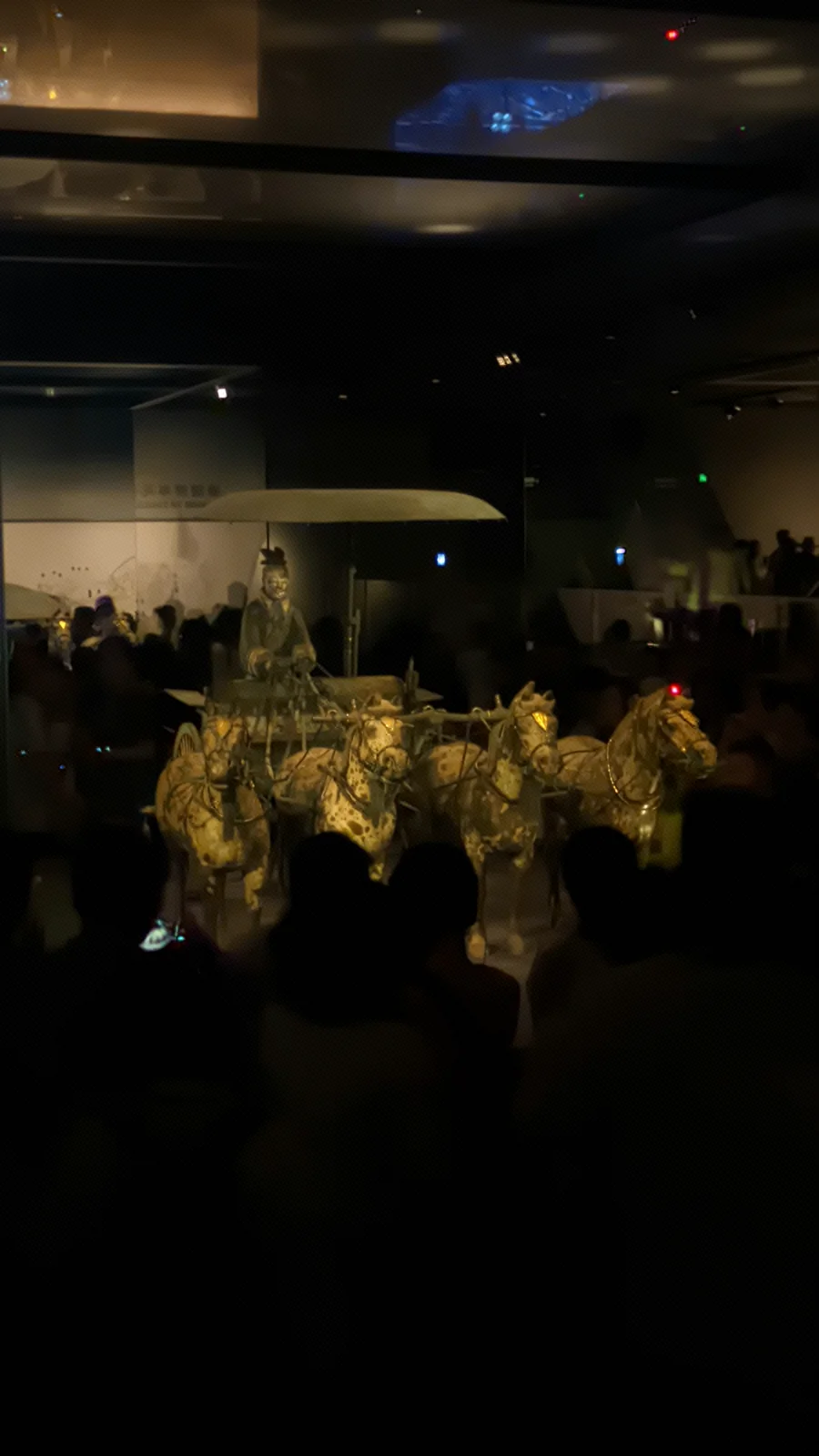
After concluding the main pits, your driver or shuttle escorts you across to the Qinshihuang Mausoleum Site Museum (Lishan Garden) to view the “Crown of Bronze”—the two painted imperial bronze chariots. Cast at half life-size in 210 BC, Chariot No. 1 (the open standing chariot) and Chariot No. 2 (the enclosed carriage) feature over 3,000 precision cast components. Inspect the bronze umbrella shaft of Chariot No. 1: halfway up the central pole sits a micro-engineered sliding-block latch mechanism that allowed the emperor’s charioteer to angle or dismount the canopy with one hand—mechanical engineering operating over 2,200 years ago.
Midday Dining & Scenic Transfer
Lunch at Your Leisure & 20-Minute Scenic Mountain Transfer
Exiting Lishan Garden around 14:30, your vehicle awaits at the designated pickup bay with climate control pre-cooled or heated. Dining on our private excursions is entirely unbundled: we firmly reject mandatory group banquet halls and kickback tourist eateries. You enjoy 100% à la carte freedom over where, what, and when you eat.
Lintong District offers exceptional regional Shaanxi specialties: handmade wide Biangbiang noodles tossed in hot chili oil, crispy roujiamo (cured pork baked in clay-oven flatbread), and warm lintong persimmon cakes. Whether you prefer a quick sit-down noodle meal, authentic halal grilled skewers, or a Western coffee break, your driver drops you directly at reputable local dining spots with zero commercial pressure.
Following lunch around 15:30, an easy 8.6-kilometer drive (approx. 17 to 23 minutes) skirts the scenic northern slopes of Mount Li, delivering you directly to the West Gate of Huaqing Palace in time for the relaxed late-afternoon hours.
Tang Imperial Retreat & Mount Li
Huaqing Palace: Imperial Hot Springs, 1936 History & Evening Show
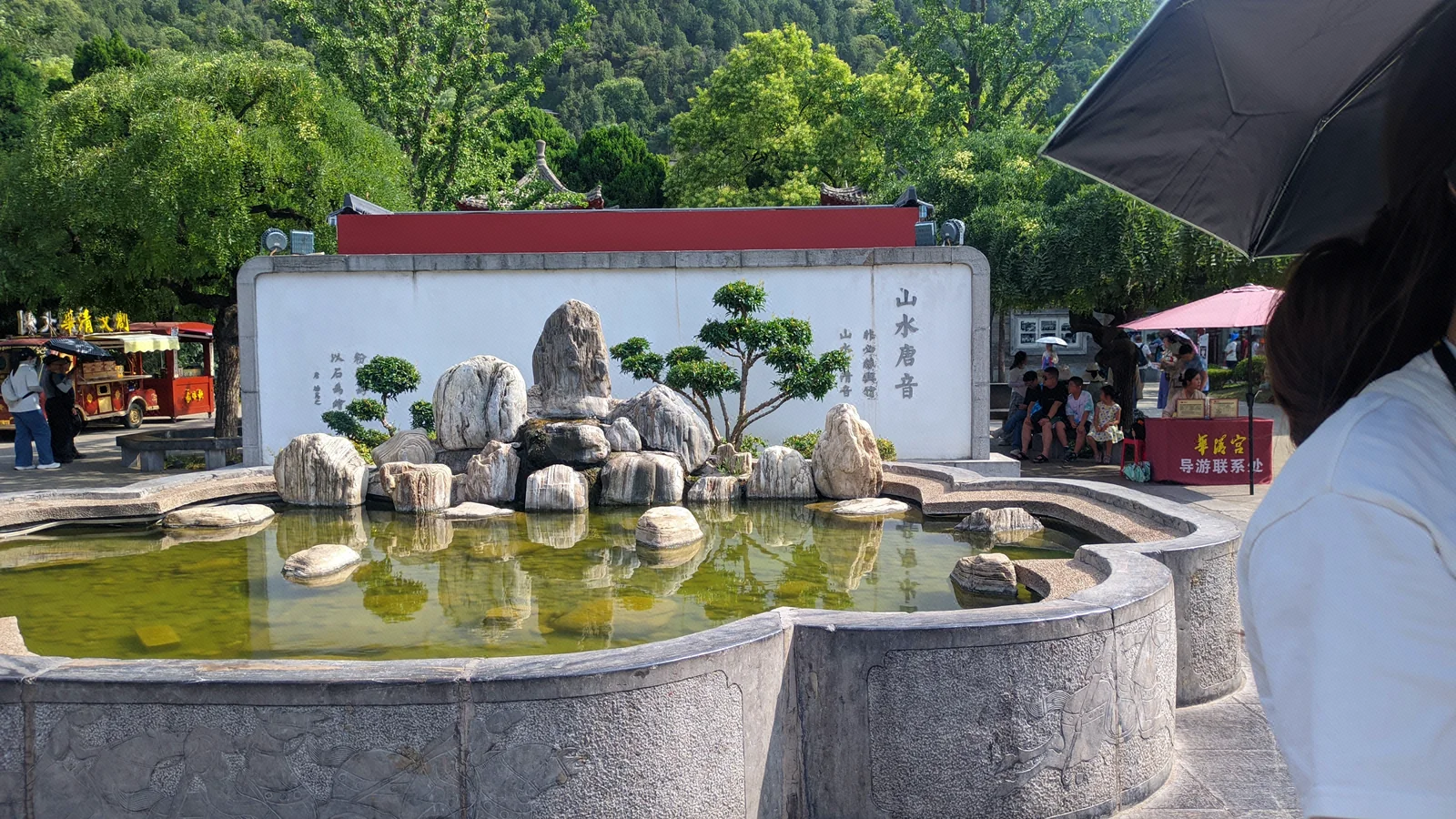
Nestled against the verdant ridgeline of Mount Li, Huaqing Palace served as the winter retreat for Tang Dynasty emperors for centuries. Day tickets cost 120 RMB per adult (operating hours: Summer 07:30–18:00, Winter 07:30–17:30). Visitors enter through the West Gate (marked by the ceremonial “Jinyang Gate” archway and the “Tang Melody” screen wall), immediately entering tranquil lakeside courtyards shaded by weeping willows.
The Imperial Hot Springs Ruins (644–756 AD)
Excavated stone baths reveal the intimate lifestyle of the Tang imperial court. The stone ruins of the Lotus Pool (莲花汤), reserved exclusively for Emperor Tang Xuanzong (Li Longji), sit on noticeably higher elevation than the adjacent Crabapple Pool (海棠汤 / Begonia Pool) crafted for his beloved consort, Yang Guifei.
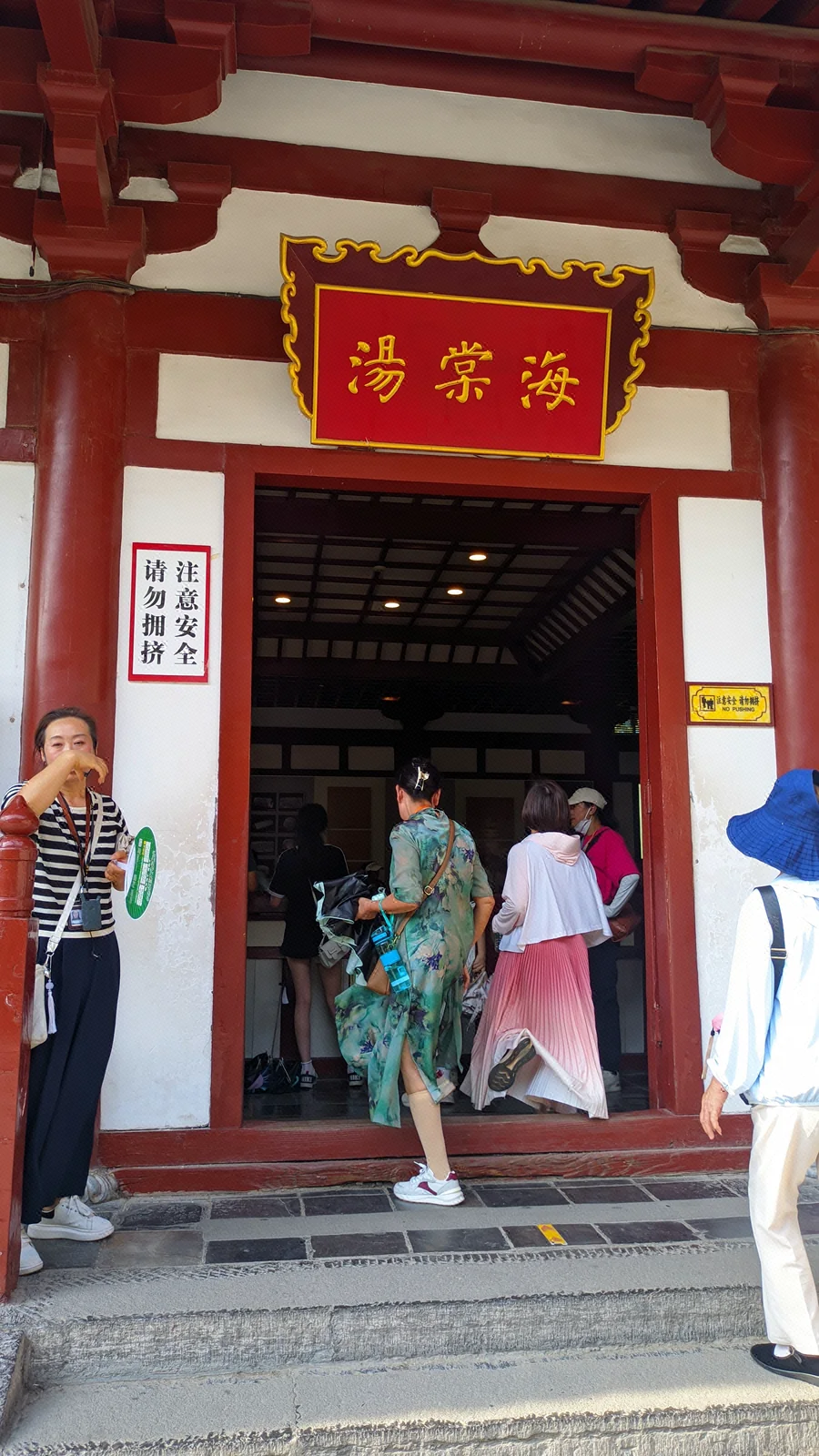
This topographic elevation difference was deliberate: pure thermal mineral spring water fed into the emperor’s bath first, before gently overflowing via gravity stone channels into the consort’s floral basin. Nearby, an official bronze plaque marks Hot Spring Source No. 1 at exact coordinates E109°12'35.8", N34°21'51.2", where natural mineral water continuously emerges at approximately 43°C. At Spring Source No. 2, warm thermal steam visibly drifts into the afternoon air.
Five-Room Hall & The 1936 Xi’an Incident
Strolling past Nine Dragon Lake and the Huan Yuan garden, you reach the Five-Room Hall (五间厅)—the temporary headquarters of Generalissimo Chiang Kai-shek in December 1936. Here, Generals Zhang Xueliang and Yang Hucheng launched the dramatic dawn raid known as the Xi’an Incident, detaining Chiang to force an end to civil conflict and establish a united front against foreign invasion.
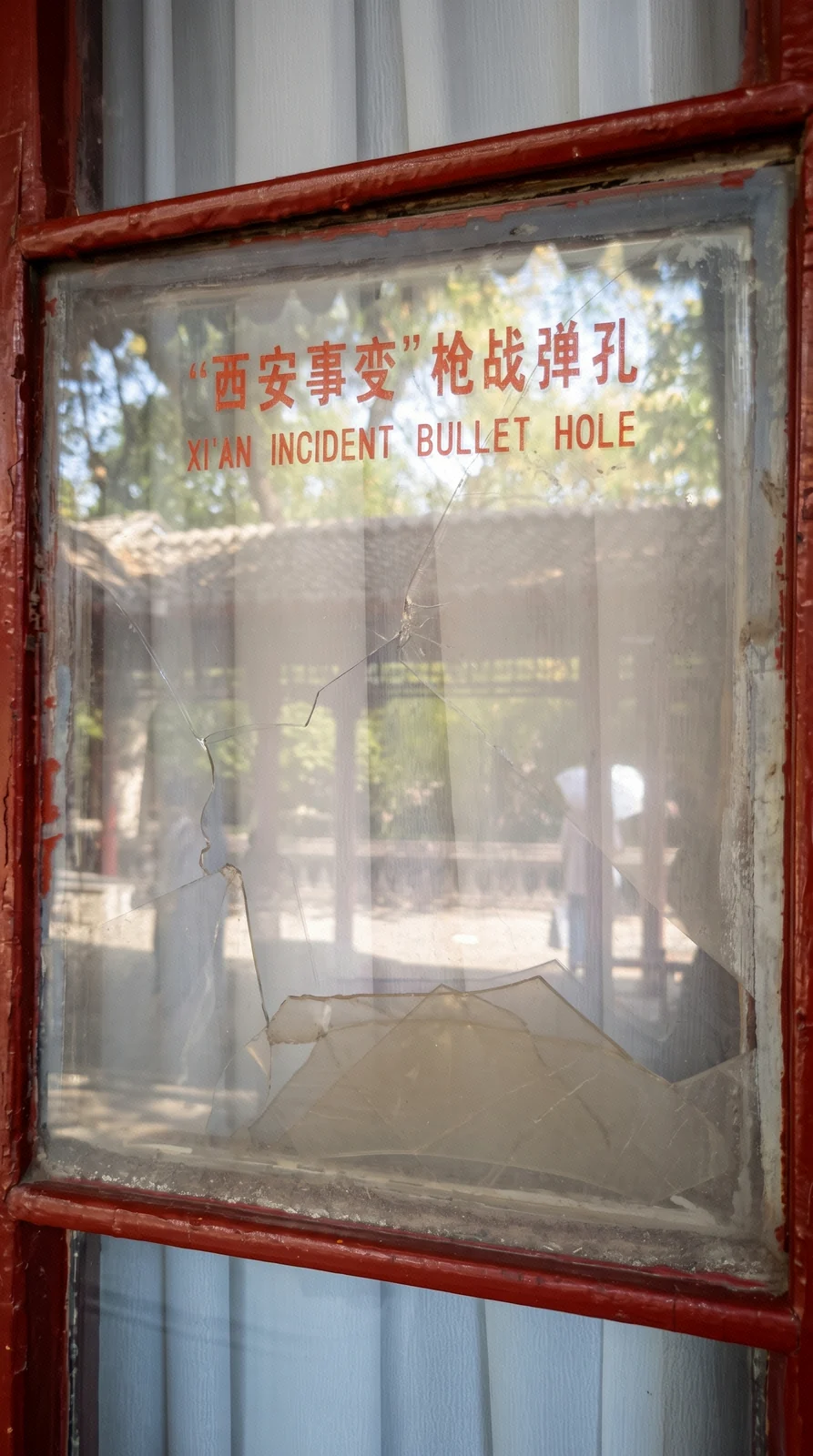
Authentic bullet holes from the morning firefight remain perfectly preserved in the wooden window frames, glass panes, and brick masonry. Behind the hall, a shaded stone staircase ascends Mount Li toward Bingjian Pavilion (兵谏亭), where Chiang took refuge in a rocky mountain crevice before his capture.
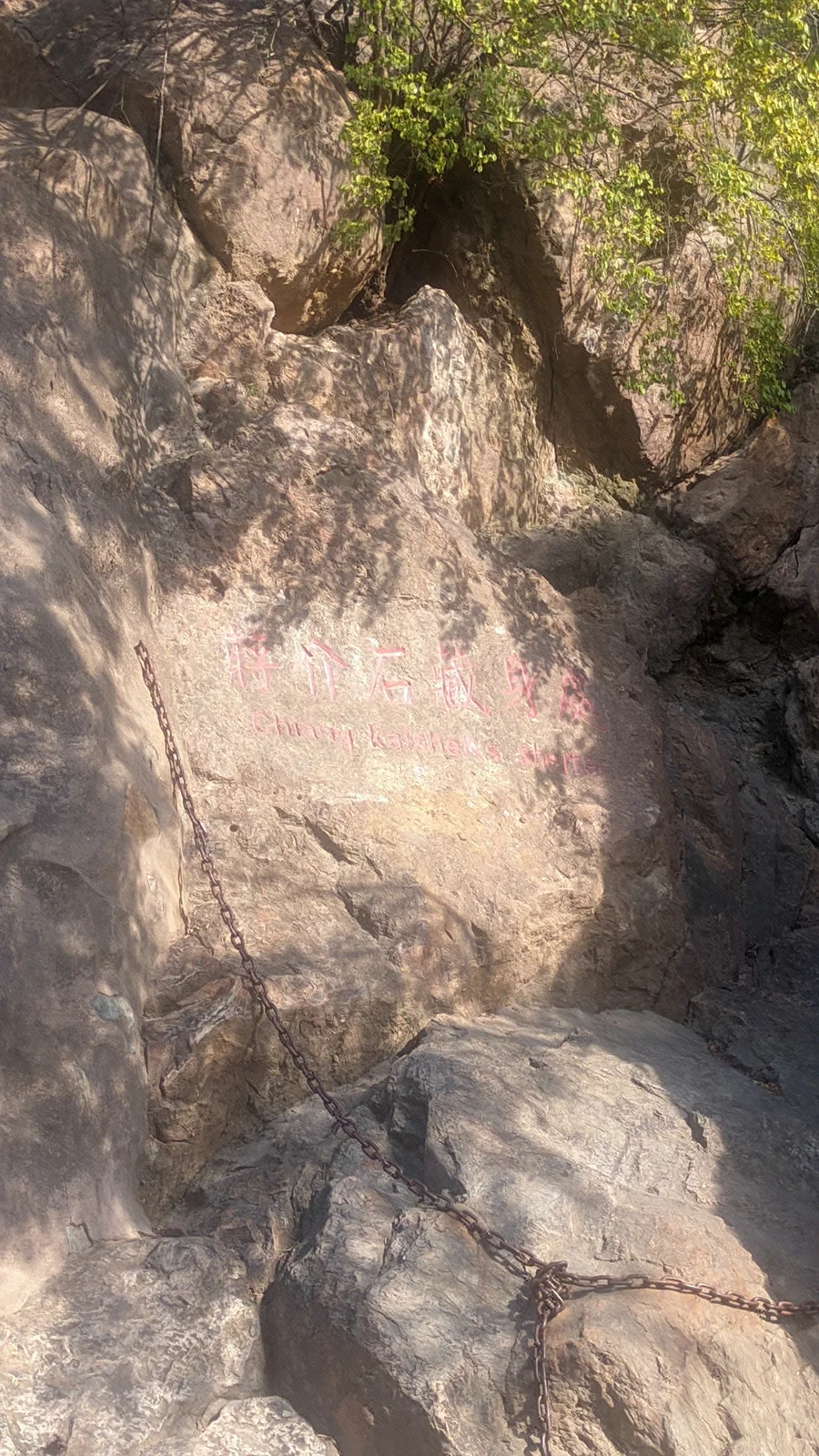
Mount Li Sunset & The Song of Everlasting Sorrow Show
Visitors with energy can ascend the Mount Li trail to Wanzhao Pavilion (晚照亭). Historically celebrated as “Lishan Sunset,” one of the Eight Scenic Wonders of Guanzhong, the pavilion offers an unobstructed panoramic view across Lintong District and Nine Dragon Lake. In high summer, golden sunset hues illuminate the forested peaks between 19:22 and 19:36.
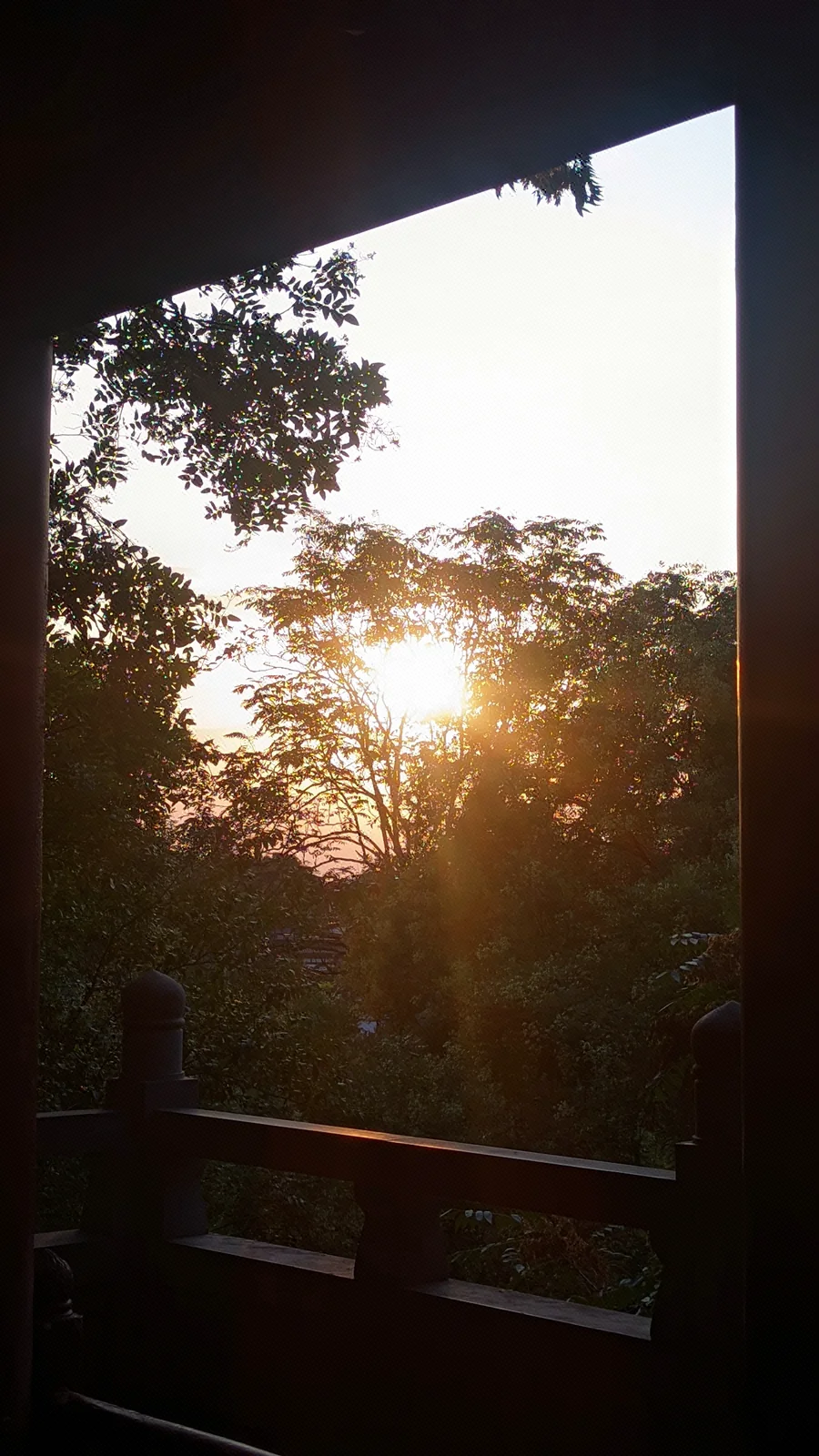
As night falls over Nine Dragon Lake, Huaqing Palace transforms into an open-air theatre for the world-renowned historical production *The Song of Everlasting Sorrow* (长恨歌). With Mount Li as its living backdrop, over 2,000 performers bring Bai Juyi’s epic poem to life across hydraulic submerged stages, misty water curtains, high-wire acrobatics, and dramatic real flames leaping across the water.
The regular outdoor season operates from late March through October with up to four nightly performances (typically at 19:40, 21:05, 22:30, and 23:55, subject to seasonal dusk adjustments). Official tickets release 10 days in advance at 09:30 (approx. 249 to 988 RMB; central seating sections at approx. 290–380 RMB offer exceptional sightlines). On our private tours, your daytime driver never pushes show sales or disrupts your cultural pacing. For guests who choose to attend, YouTu Travel coordinates official ticket bookings and arranges midnight private car transfers directly back to your Xi’an hotel.
Operational Protocols
Practical Dispatch Notes: Foreign Passports, Pacing & Driver Ethics
Real-Name Passport Entry Verification
Both the Terracotta Army and Huaqing Palace enforce strict real-name ticketing tied to passport numbers. Travelers must carry their physical original passport on the day of the trip. Digital photos or photocopies on smartphones are not accepted at electronic turnstiles. Paper tickets are obsolete: scanning your physical passport at the automated gate verifies your booking and grants immediate entry.
Professional Boundaries & Dedicated Driving
Under YouTu Travel operational standards, your private chauffeur is dedicated solely to professional highway navigation, punctual door-to-door coordination, and vehicle security. Drivers do not double as uncertified tour guides inside scenic areas, ensuring they remain well-rested for safe driving. For guests desiring scholarly historical commentary, we arrange certified bilingual culture docents upon request.
Transparent Routing & Zero Commission Policy
All itineraries are operated with no commissioned shopping stops—your driver’s only focus is the route. We never divert travelers to commercial jade factories, replica terracotta workshops, or tourist tea ceremonies. All ticket prices, shuttles, and optional performance admissions quoted reflect official scenic area pricing (RMB) for transparent traveler reference.
Traveler Inquiries
Frequently Asked Questions: Xi’an Route 01
Is 1 full day truly enough to see both the Terracotta Army and Huaqing Palace?
Yes, exactly. With a dedicated private vehicle handling the 44 km expressway drive and the 8.6 km mountain transfer, you spend 3.5 hours at the Terracotta Warriors (Pits 1, 2, 3 and Lishan Garden), enjoy an unhurried local lunch, and spend 2.5 to 3 hours at Huaqing Palace and Five-Room Hall. You return to downtown Xi’an between 18:00 and 19:00, or stay for the evening *Song of Everlasting Sorrow* performance.
Can we store our heavy suitcases in the vehicle during our visits?
Absolutely. Your luggage remains locked securely inside the vehicle’s trunk in designated official parking areas throughout both visits. This makes Route 01 ideal as an arrival or departure transfer—we can pick you up from Xi’an Xianyang Airport (XIY) or Xi’an North Railway Station, complete the full tour, and drop you at your downtown hotel in the evening.
Do we need an on-site docent at the Terracotta Warriors Museum?
An on-site guide significantly enriches your experience by pointing out micro-details like boot stitching, ear shapes, and ancient paint pigments that casual visitors overlook. Official museum guides cost approximately 300 RMB but book out weeks in advance; freelance guides outside the entrance charge around 90 RMB but vary widely in quality. YouTu Travel provides optional certified bilingual cultural hosts who stay with your party throughout the day.
What happens if we book the evening *Song of Everlasting Sorrow* performance?
If you choose to attend the show, we adjust your afternoon schedule so you can watch the sunset from Mount Li or enjoy an early dinner in Lintong. Following the show’s conclusion (approx. 21:00 for the first show, or 22:30 for the second), your driver meets you directly outside the palace gate and whisks you back to your central Xi’an hotel via expressway in roughly 60 minutes, bypassing the chaotic midnight bus lines.
Bespoke Shaanxi Chauffeured Day Tours
Reserve Your Private Xi’an Route 01 Day Excursion
Door-to-door hotel pickup, premium air-conditioned vehicle, luggage trunk security, and complete schedule freedom. No commercial detours, no unsolicited sales pitches—just Emperor Qin’s subterranean legions and Mount Li’s imperial baths at your personal pace.